
On Common Knowledge [Essay]
What should people know?

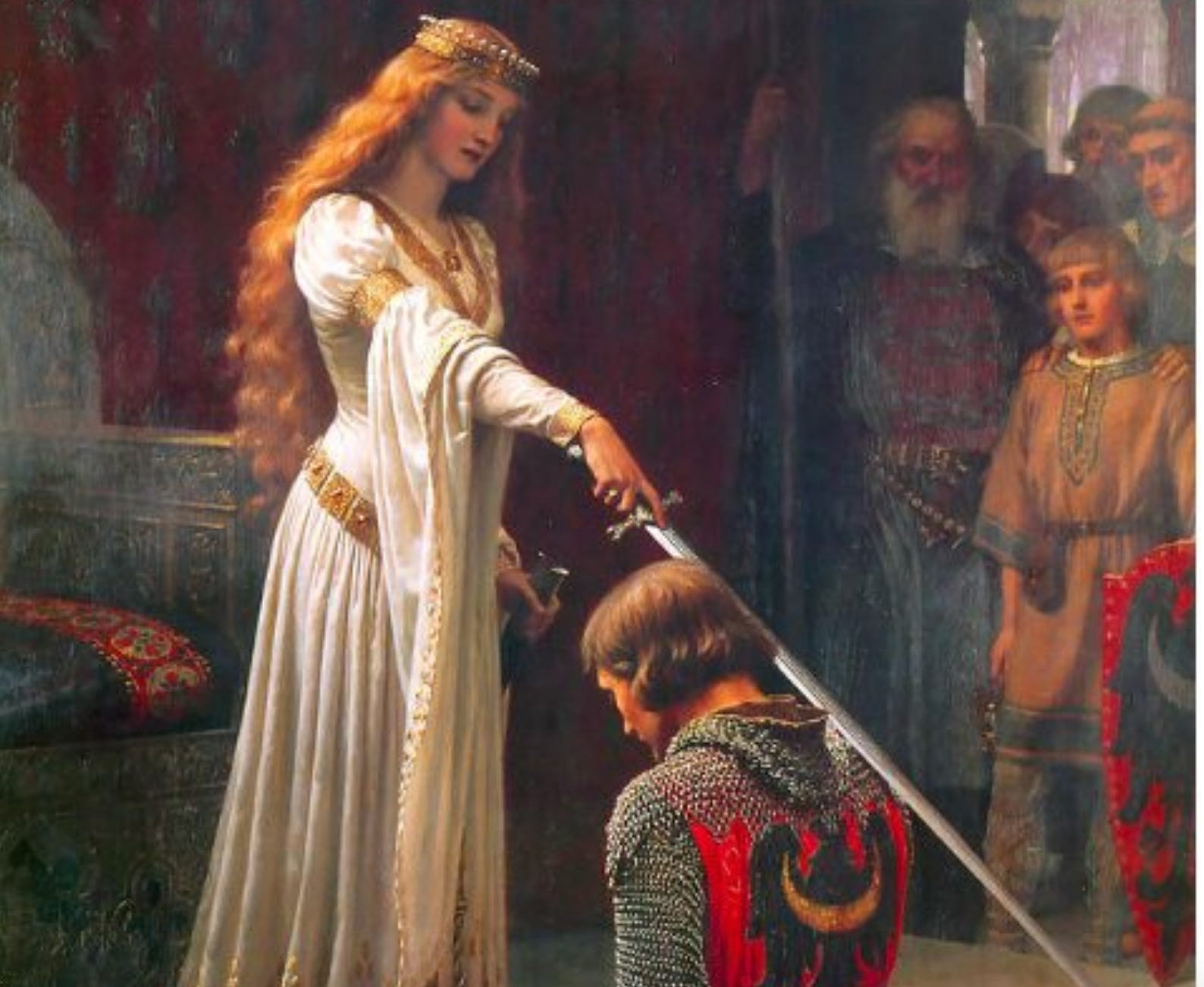
I was sitting next to a successful journalist at a dinner, about 10 years ago, and the subject turned, for some reason or another, to Wind in the Willows. I started talking about Kenneth Grahame, and the success of his previous books, The Golden Age and Dream Days, and explained that Wind in the Willows itself was not really intended as a children’s book, but as something to lift the spirits of the down-trodden city clerk, and how it was interesting that Grahame had been a terrible father to his only son, whom he called Mouse… at which point I noticed that my interlocutor was looking at me strangely. “How do you know all this?” she asked. Well, I answered, I read about it. How did you expect me to know?
It’s always seemed a strange question to me, and it’s one that comes up surprisingly often. How do you know this? It makes me wonder: do people go through life not reading, not assimilating, not picking up stuff as they go along? It cannot be something that’s peculiar to the novelist or to someone in the literary world: to want to know things, to connect things together.
Granted, knowledge of Kenneth Grahame’s life might be regarded as particularly specialist, though, given the importance of Wind in the Willows in the English national psyche, I wonder why it should be. Increasingly, though, I find that what was once common knowledge is now regarded as specialist, even esoteric.
When I taught in the English department at a pretty decent university, I was astonished that most of my third year undergraduates didn’t know who Orpheus was. Orpheus! The byword for musical excellence - the singer who moved trees to walk and calmed beasts with his voice. And even if they hadn’t heard of Orpheus himself, might they not have come across him in popular culture? There is the Jean Cocteau film, Orphée; there is the Robertson Davies novel The Lyre of Orpheus; he even appears in Rick Riordan’s Percy Jackson series, and so on.
I hear this a lot, now, from teachers and lecturers: the basic elements that underpin art, music and literature are fading. This is deeply sad, as if you want to understand English literature - if you want to understand English history - you have to know at least the basics of Classical and Biblical narratives. Reading John Milton, for example, is impossible without it. You can engage with William Shakespeare without knowing much about Pyramus and Thisbe, but it helps if you know who they are. Similarly, Troilus and Cressida makes a lot more sense if you know who the heroes are that Shakespeare is satirising. Right up until today, novelists work with Classical narratives - recently Mark Haddon wrote a whole book, Dogs and Monsters, riffing on Greek myth and legends of the saints. You can’t pick up an Iris Murdoch, or a Robertson Davies, without stumbling on reams of Classical references. (I’ve written before about E Nesbit and what the children reading Five Children and It might be expected to know. )
Why is this? Well, firstly, the myths, fairy tales and legends that sustained my generation (born in the 1980s) in our youth have, for some time now, been replaced by screens. (Sure, this may even have been the case when I was little, but I recall the county primary school I attended from 5-7 being pretty strong on myths, legends and history, not to mention the books I encountered at home and in the library.) The effects of a lack of early immersion or even exposure are clear. Many of the undergrads I taught in the mid 2010s had only come across fairy tales in their Disney-fied form; they were shocked to discover the “real” underpinnings of, say, Cinderella. (Worse, many of them had only come across C S Lewis and J R R Tolkien in their cinematic forms, something I discovered when I marked their essays - but that’s another story.)
Secondly, there seems to be a mild suspicion of “knowledge” in and of itself - as displayed by my (highly educated) interlocutor above. What did she mean when she asked “how” I knew it, I wonder? Did she think I was making it up, or showing off? Or worse, being pretentious?
Thirdly, the enormous decline in scriptural knowledge. Remarkably, in the United Kingdom, it is still law for schools to provide a daily act of collective worship. But, since 2004, Ofsted has stopped inspecting schools for compliance, because some 3/4s of schools did not offer it anyway. Daily exposure to Bible stories, or even to someone talking about Bible stories, has all but vanished (and Church attendance remains very low). And whether or not you are a Christian, this means a huge drop in common cultural knowledge.
Again, the results are clear: a concomitant lack of understanding of the basic elements that form the riches of art and music. Zadok the priest? Nathan the prophet? Who they? At the same time, Religious Education has become more about studying all religions - a good thing, of course, especially in a world of pluralism - but it does, of course, mean less time for Matthew, Mark, Luke and John. How many children these days, I wonder, know what their symbols are? (This isn’t helped by an active desire to downplay the Christianity of England in the past, as seen in the recent film Hamnet, where Anne Hathaway is a sort of witchy wise woman of a kind that never existed.)
You might say that these things can be picked up at undergraduate level. But, as I experienced myself, they can’t be. There’s too much of it. You can’t spend a seminar explaining who Orpheus is before you talk about the text itself. These things need to be encountered in our daily lives, in different forms, discussed, enjoyed, played with. But they just aren’t. Of the books that my children are given to help them learn to read in the Oxford Reading Tree, I do not recall seeing a single one that had any basis in myth, legend or the Bible.
So: my pitch to be Education Minister one day. In my fantasy school curriculum, in their first and second years at school, children would spend just as much time with King Arthur and Guinevere, Hercules and Helen, King Solomon and Delilah, as they do with number bonds and phonics.
I suppose it all comes down to one thing: elitism. It is somehow considered elitist to know things, and perhaps to be proud of knowing them. But surely the elitist position is exactly the opposite: preventing children, actively stopping them, from reading, learning about and loving the matter that has contributed the world around them for centuries. The death of King Arthur; the labours of Hercules; the judgments of King Solomon: these, and more, will teach children about humanity, and provide them with a mental framework which will sustain them throughout their lives. You might well say that English Lit undergraduates don’t know how to wire a plug, so why should Engineering undergrads know about Orpheus? Well, you can work out how to wire a plug from a YouTube video, if you really need to. But having Orpheus as a touch point in your mind, as a reference for beauty, devotion and tragedy? No amount of videos can ever replace that.
My husband and I occasionally have a conversation about the fact that we are from the generation who were at school in the 1950s and 60s and we are probably the last generation to know the words of the hymns in 'Hymns Ancient and Modern'. We sang them every day. They are part of our mental architecture - as are the words from the Book of Common Prayer.
I read and re-read Collins Children’s Encyclopaedia when I was a kid. What sort of child does that now?
Thanks for posting this. I was beginning to think it was just me.